New research from SSRS finds that 37% of U.S. adults have used an online dating site or app at some time in their lives, and that 6% are currently using an online dating site or app.
- About half of adults aged 18-29 (51%) and 30-49 (53%) have used online dating sites or apps, compared with 20% of adults aged 50 or older. These younger age groups of adults are also more likely to be current users: 10% of 18–29-year-olds and 8% of 30–49-year-olds, compared with 2% of 50+ year-olds.
- More than six in ten LGBTQIA+ (lesbian, gay, bisexual, transgender, queer/questioning, intersex, asexual) adults (63%) report that they have used online dating sites or apps (including 14% who are current users), compared with 34% of non-LGBTQIA+ adults (including 4% who are current users).
These findings are part of an SSRS Opinion Panel Omnibus poll conducted January 2 – 4 and 16 – 20, 2026, among a nationally representative sample of 2,012 adults aged 18 and older.
The Public’s Use of Online Dating Sites or Apps

Online Dating Sites or Apps Used
Among those who have ever used an online dating site or app, 48% say they have used Tinder, making it the most-often used of a list of sites/apps, followed by Plenty of Fish (30%), Facebook Dating (30%), Bumble (27%), Hinge (21%), and Match (21%).
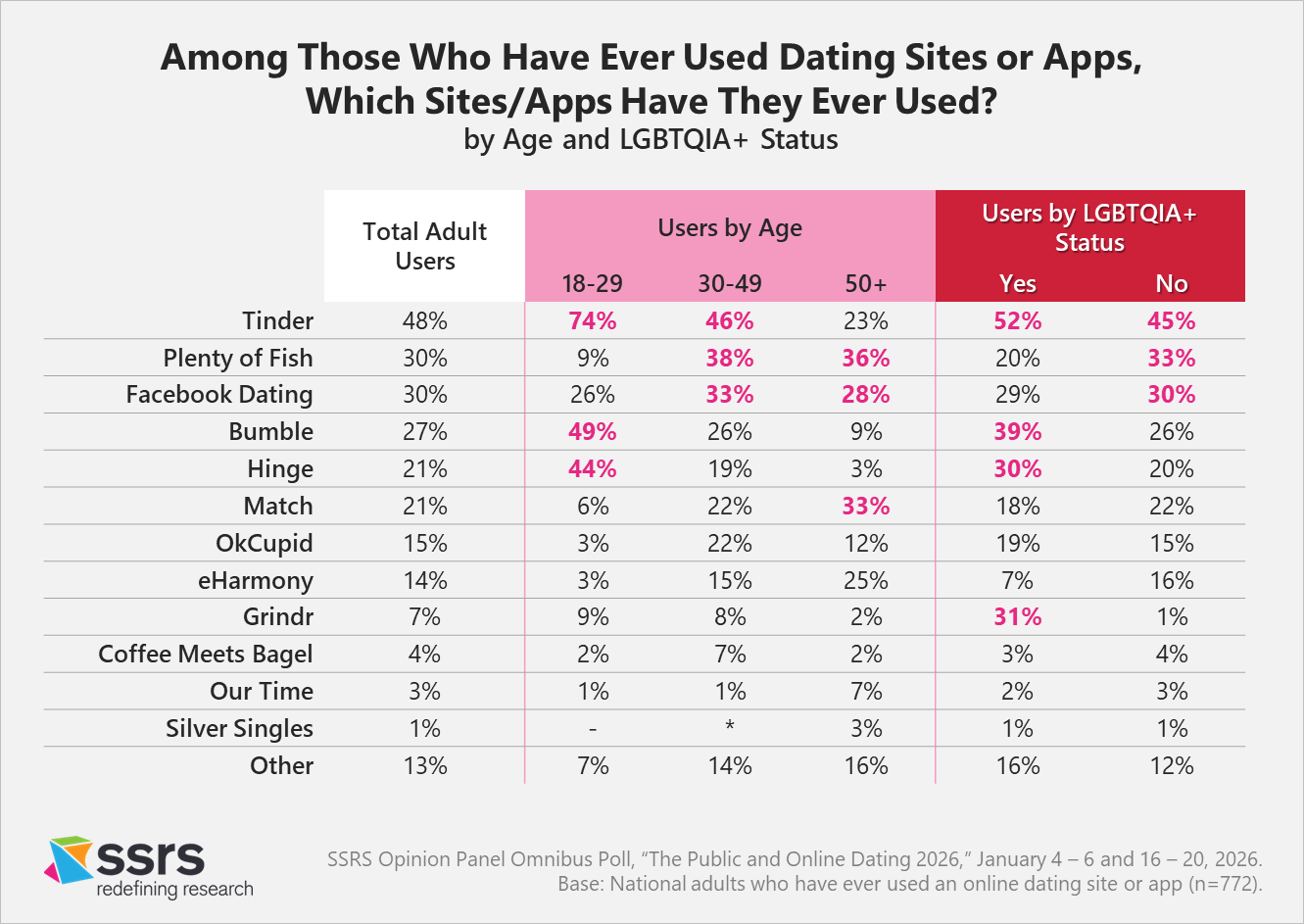
The most-used dating sites/apps vary by the age of users. Among 18–29-year-olds who have ever used dating sites/apps, Tinder (74%), Bumble (49%), and Hinge (44%) are the top three sites/apps used. Among 30–49-year-old users, Tinder (46%), Plenty of Fish (38%), and Facebook Dating (33%) top the list; among users aged 50 or over, the top three sites/apps are Plenty of Fish (36%), Match (33%), and Facebook Dating (28%).
The most-used dating sites/apps also vary by LGBTQIA+ status. Among LGBTQIA+ adults who have ever used dating sites/apps, Tinder (52%) and Bumble (39%) are the top sites/apps, while about three in ten have used Grindr (31%) and Hinge (30%). Among non-LGBTQIA+ adult users, the top sites/apps are Tinder (45%), Plenty of Fish (33%), and Facebook Dating (30%).
What Users of Online Dating Sites or Apps Consider Very Important in Matching with Someone
When those who have ever used an online dating site or app are asked how important each of eight characteristics are/were in matching with someone online, sharing similar family values is the characteristic most often cited as very important (51%), followed by sharing similar political beliefs (33%) and religious or spiritual beliefs (31%). The lowest-ranked factor is the person making as much money as they do (9% very important).
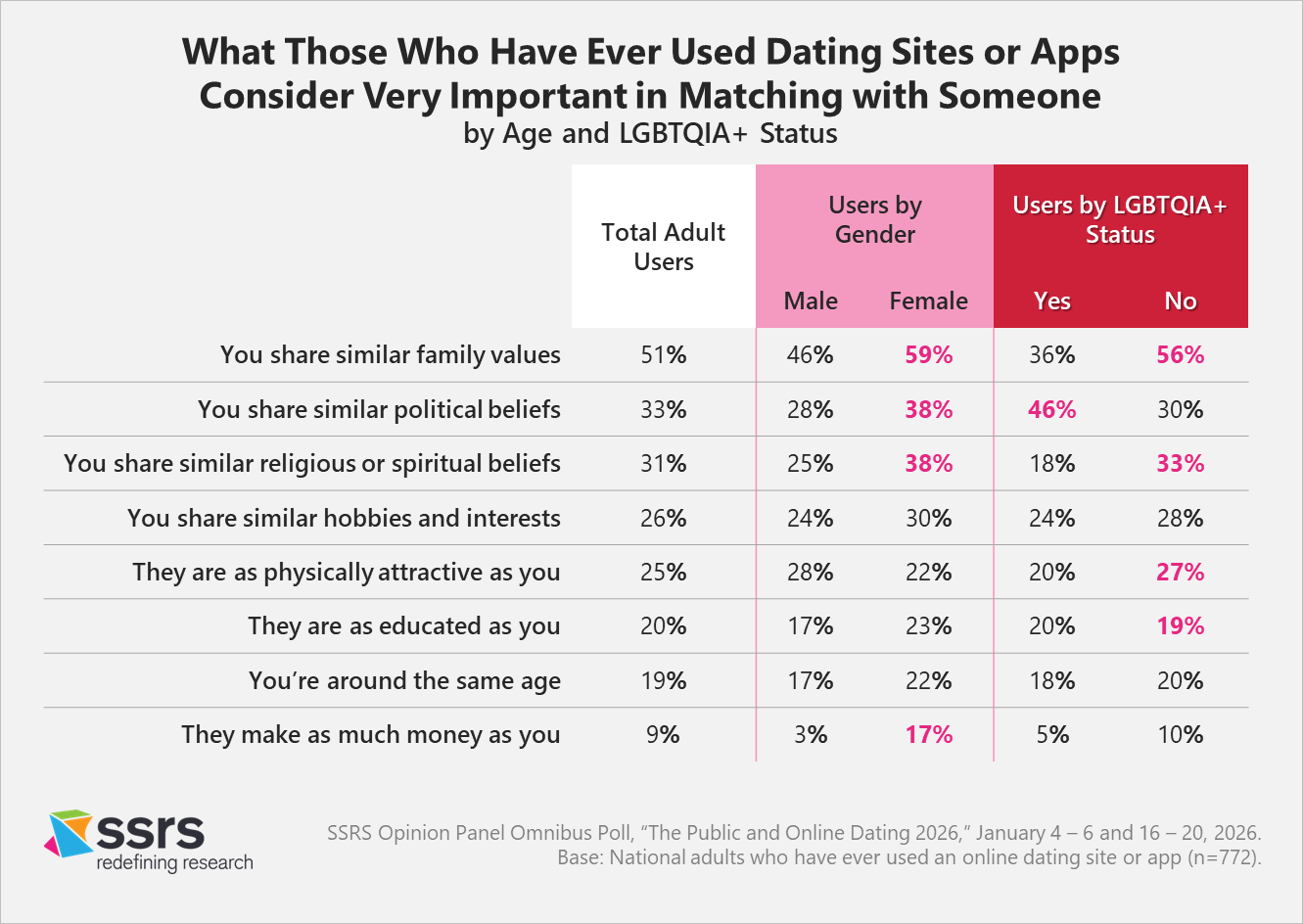
Among those who have ever used an online dating site or app, women are more likely than men to cite several characteristics as very important in matching with someone online. Notably, about six in ten women (59%) cite sharing similar family values as very important, compared to 46% of men. Women are also significantly more likely than men to say that sharing similar political values (38% of women, 28% of men) and religious or spiritual beliefs (38% of women, 25% of men) are very important.
Among LGBTQIA+ adults who have ever used an online dating site or app, sharing similar political beliefs is the top reported consideration in matching with someone (cited by 46% as very important). Among non-LGBTQIA+ users, sharing similar family values was the top reported consideration (named by 56% as very important). Non-LGBTQIA+ users are also significantly more likely than LGBTQIA+ users (33% to 18%) to report that sharing similar religious or spiritual beliefs is very important.
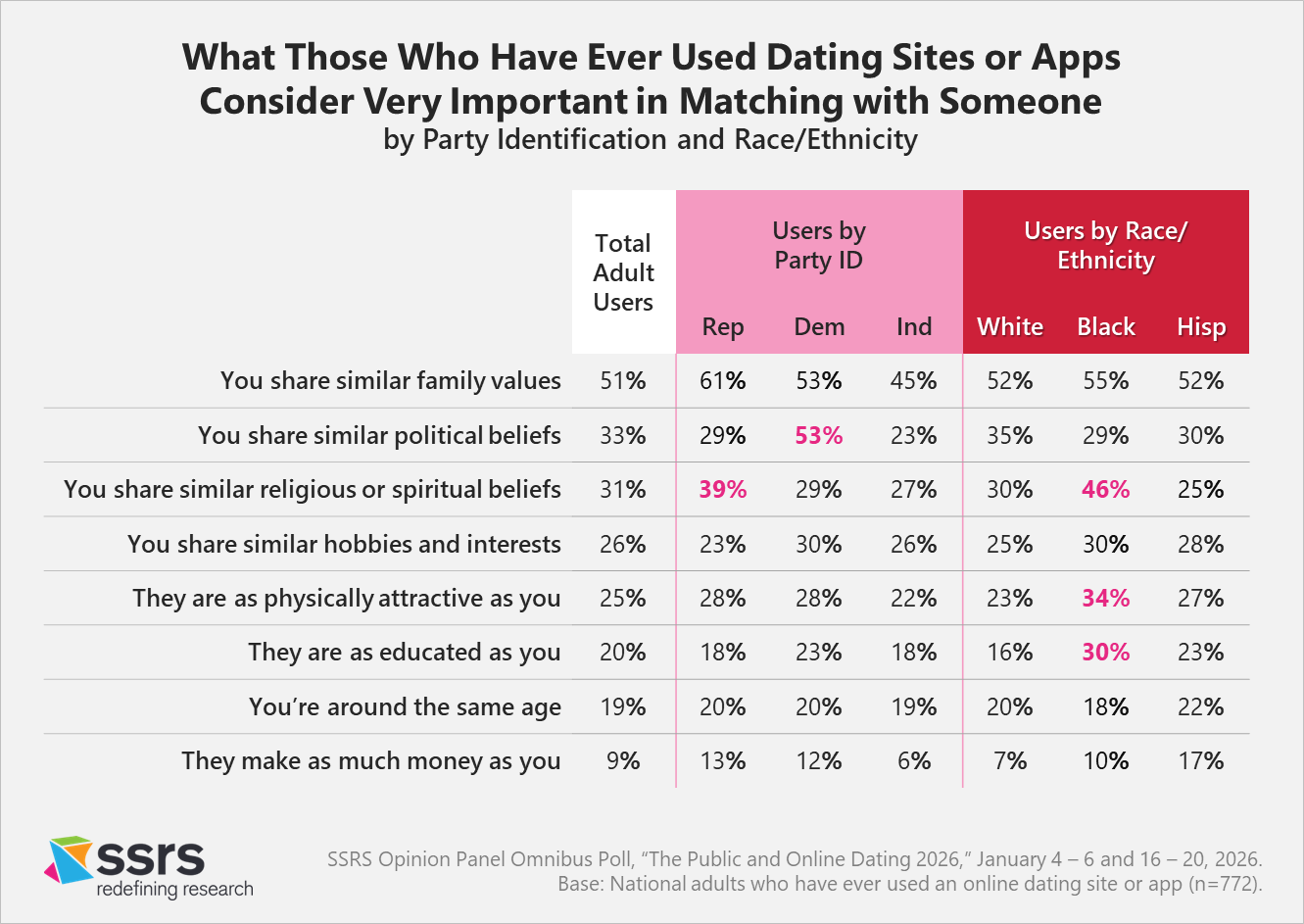
When it comes to political identification among those who have ever used an online dating site or app, Democrats (53%) are significantly more likely than Republicans (29%) and Independents (23%) to say that sharing similar political beliefs is very important in matching with someone online. Republican users (39%) are also more likely than Democratic (29%) and Independent users (27%) to say that sharing similar religious or spiritual values is very important.
Black adults who have ever used an online dating site or app are significantly more likely than white adult users to cite sharing similar religious or spiritual beliefs as very important in matching with someone online (46% black adult users, 30% of white adult users); also that the person is as physically attractive (34% to 23%) and as educated (30% to 16%) as they are.
Young adults (aged 18-29) who have ever used an online dating site or app are significantly more likely than those aged 30 or over (29% to 16%) to say that being around the same age is very important in matching with someone online.
What Reasons Those Who Have Ever Used Online Dating Sites or Apps Give for Why They Have Used Them
When those who have ever used online dating sites or apps are asked their main reason for using them, the top reason is to find an exclusive romantic partner (58%). This is the number one reason given by every major demographic group. Women are more likely than men (24% to 17%) to say that the main reason is to have something fun or interesting to do; men are more likely than women (12% to 2%) to say it is to have casual sex.
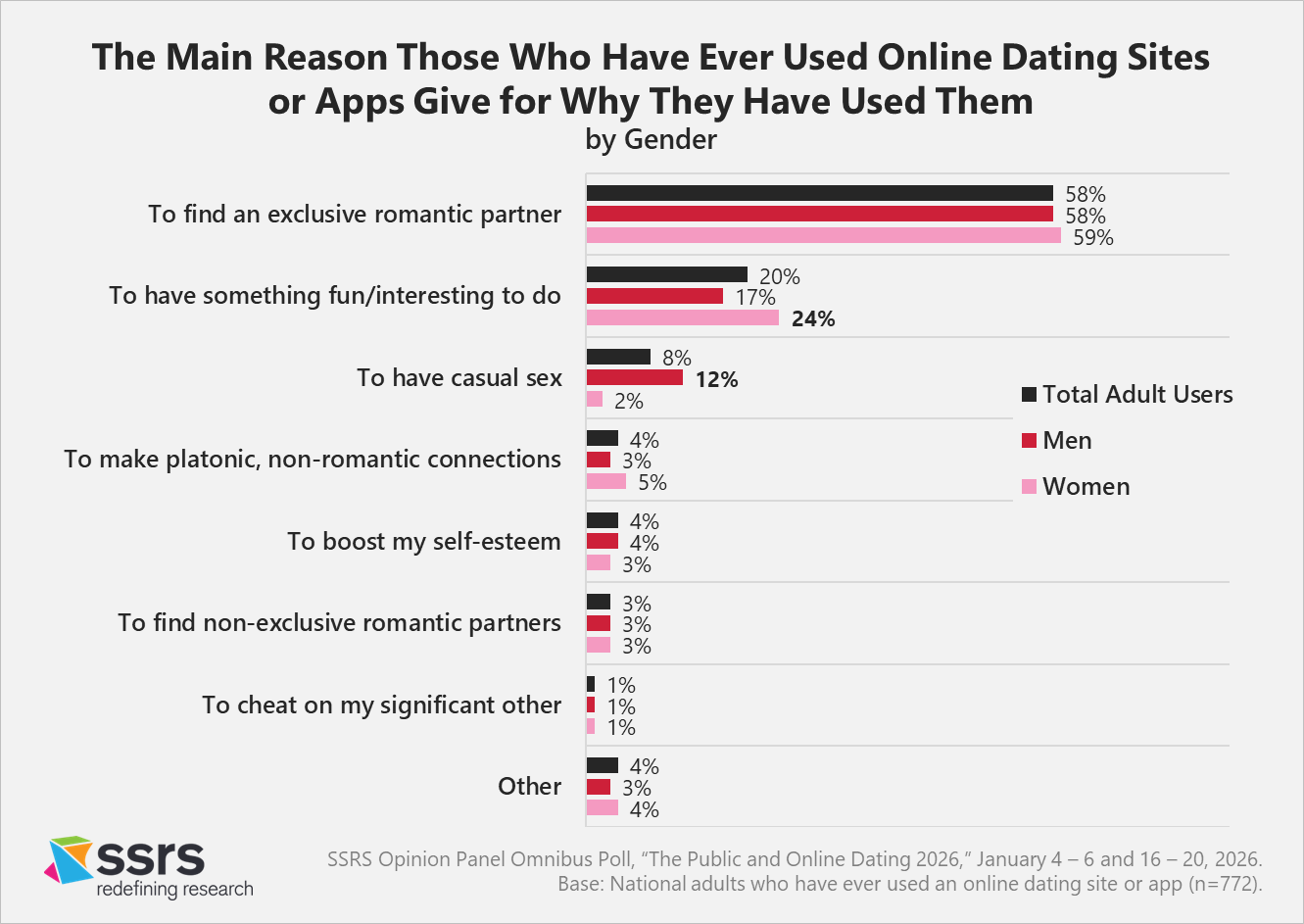
LGBTQIA+ users of online dating sites/apps are less likely than non-LGBTQIA+ users (49% to 62%) to say the main reason is to find an exclusive romantic partner, but that was by far the top reason for both groups and basically the two groups largely share similar reasons.
What Effect Users Say Online Dating Sites or Apps Have on Their Dating and Relationships
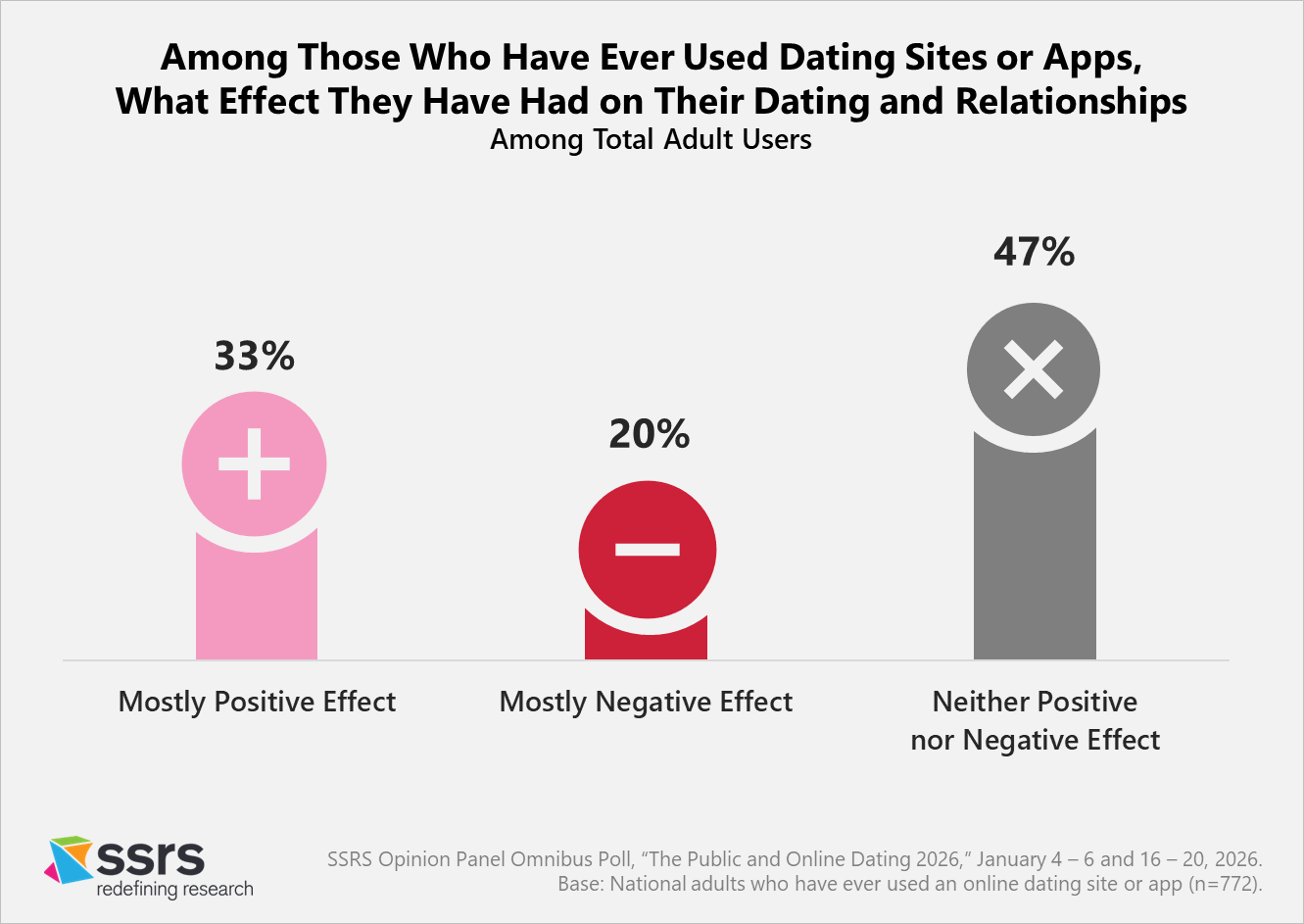
When asked what type of effect online dating sites or apps have had on their dating and relationships, nearly half of those who have ever used such sites/apps report that the effect was neither positive nor negative (47%). About one-third (33%) say their effect has been mostly positive and 20% that their effect has been mostly negative. Among all major demographic groups, the most common response is that the effect has been neither positive nor negative.
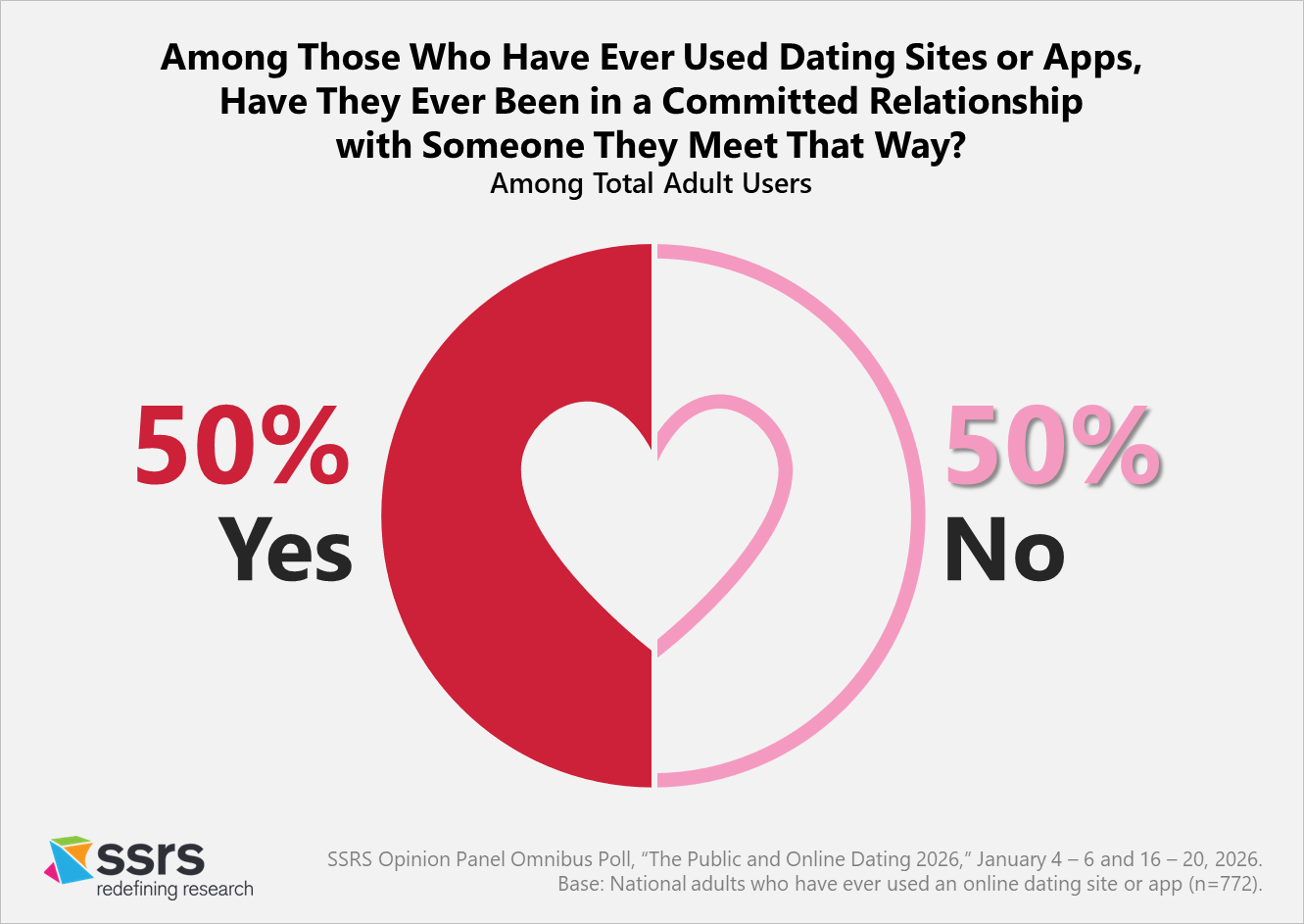
Half (50%) of adults who have ever used an online dating site or app report that they have at some time been in a committed relationship with someone they met through such a dating site/app. This reported figure varies little across users’ demographics, although users with household incomes of $75,000 a year or more are more likely than those with household incomes less than $50,000 a year (58% to 44%) to report having had a committed relationship.
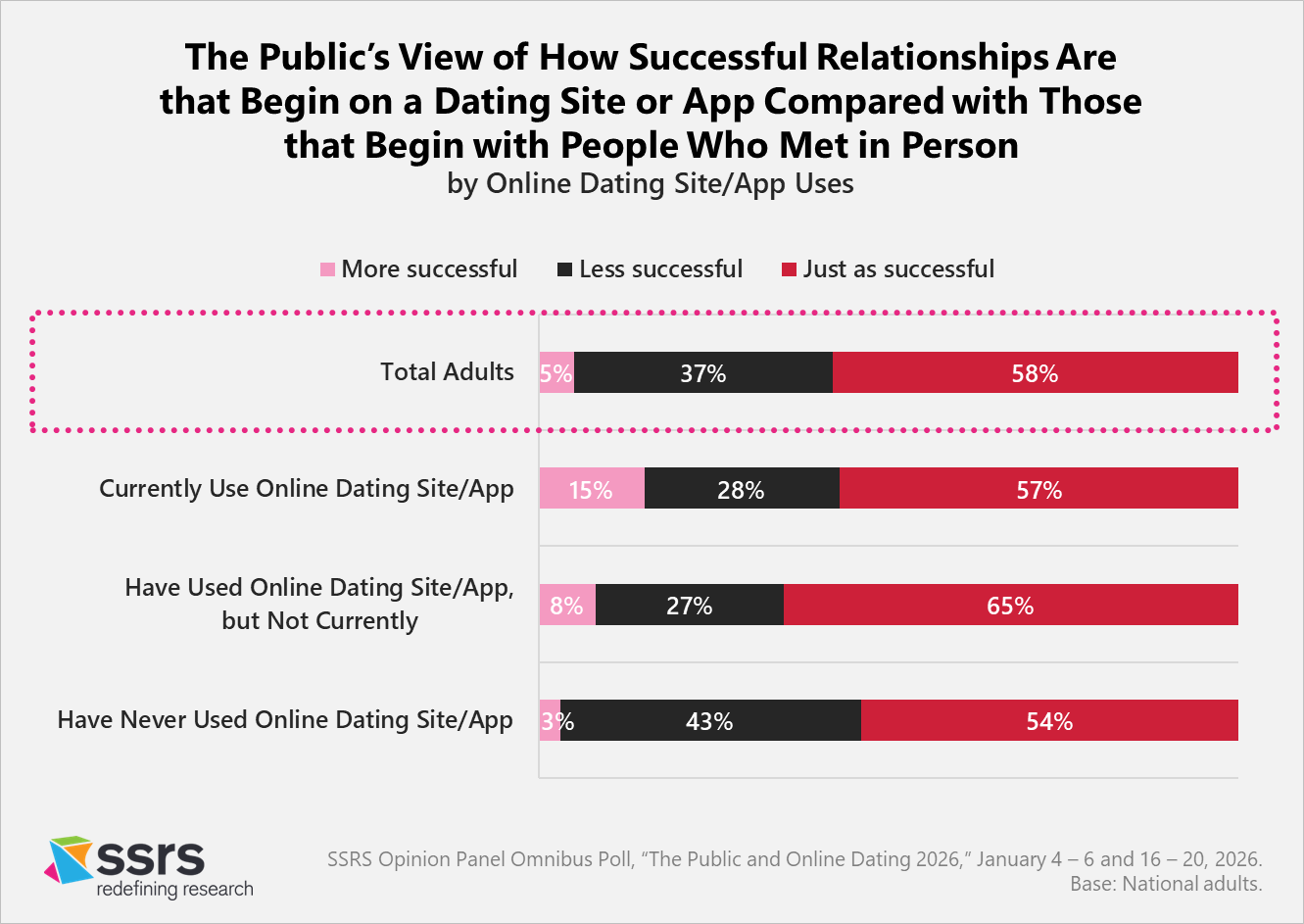
A majority of adults nationally believe that relationships that begin on dating sites or apps are just as successful as those that begin with people who meet in person (58%); 37% believe they are generally less successful and 5% that they are more successful. Those who have never used an online dating site or app are more likely than those who have used one to believe that relationships that begin on dating sites or apps are generally less successful (43%), but even among this group, 54% believe they are just as successful.
How Safe U.S. Adults Believe It Is to Meet Someone in Person Who They Met on a Dating Site or App
A majority of adults nationally believe that meeting someone in person who you met on a dating site or app is generally safe (57%), although this includes only 5% who think it is very safe. Nearly four in ten (43%) think it is not too or not at all safe. Women are significantly more likely than men (55% to 30%) to believe it is not too/not at all safe.
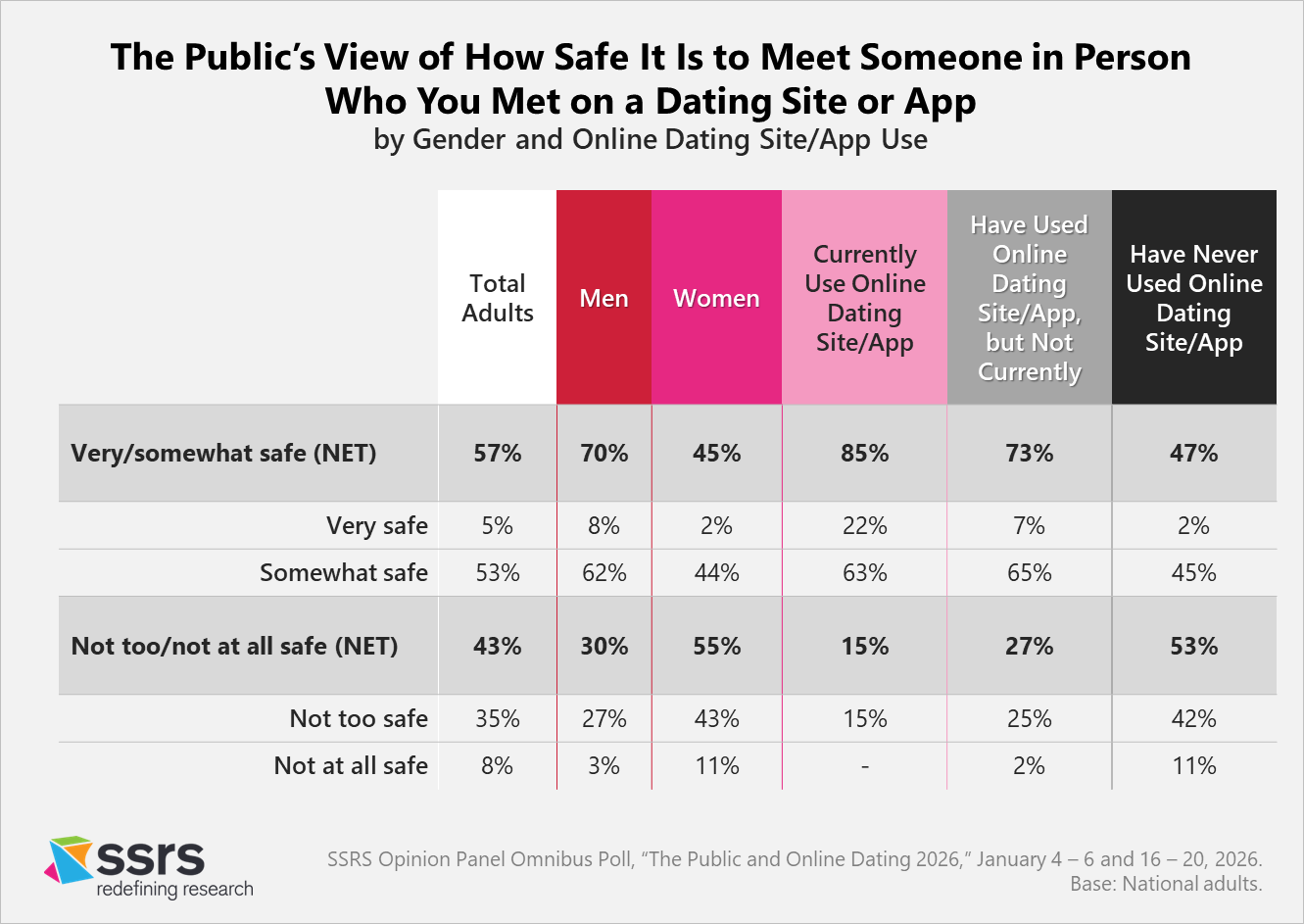
More than half of adults who have never used a dating site or app (53%) believe it is not too or not at all safe, a view shared by only 15% of those who currently use a dating site/app and 27% of those who have ever used a dating site/app but do not use one currently.
LGBTQIA+ users of online dating sites/apps (38%) and non-LGBTQIA+ users (42%) are about equally likely to believe that meeting someone in person who you met on a dating site or app it is unsafe.
Methodology
Interviews for this study were conducted on the SSRS Opinion Panel Omnibus from January 2 – 4 and 16 – 20, 2026, among a nationally representative sample of 2,012 respondents aged 18 and older. The margin of error for total respondents is +/-2.5 percentage points at the 95% confidence level. The design effect is 1.27. View the questions used for this analysis, along with the responses >>.
The SSRS Opinion Panel Omnibus is a multi-client, probability-based survey that fields twice a month. It delivers a nationally representative sample of 1,000 adults aged 18 or older in English (with Spanish language option). Data collection is conducted online and via phone (for non-internet and web-reluctant respondents) using the probability-based SSRS Opinion Panel.