The World Cup kicks off next week in North America for the first time since 1994. Over those 32 years, the soccer landscape in the U.S. has changed dramatically.
There is now a stable professional soccer system (including Major League Soccer and the United Soccer League), fans can easily watch games from leagues around the world, and Lionel Messi even ranks as Americans’ favorite pro athlete today. The 1994 World Cup served as a springboard, but subsequent World Cups have strengthened soccer’s standing in the U.S.
Sports Poll has been tracking the growth of soccer for more than 30 years, and pro soccer fandom has enjoyed a bump during every World Cup year from 1998 through 2022.
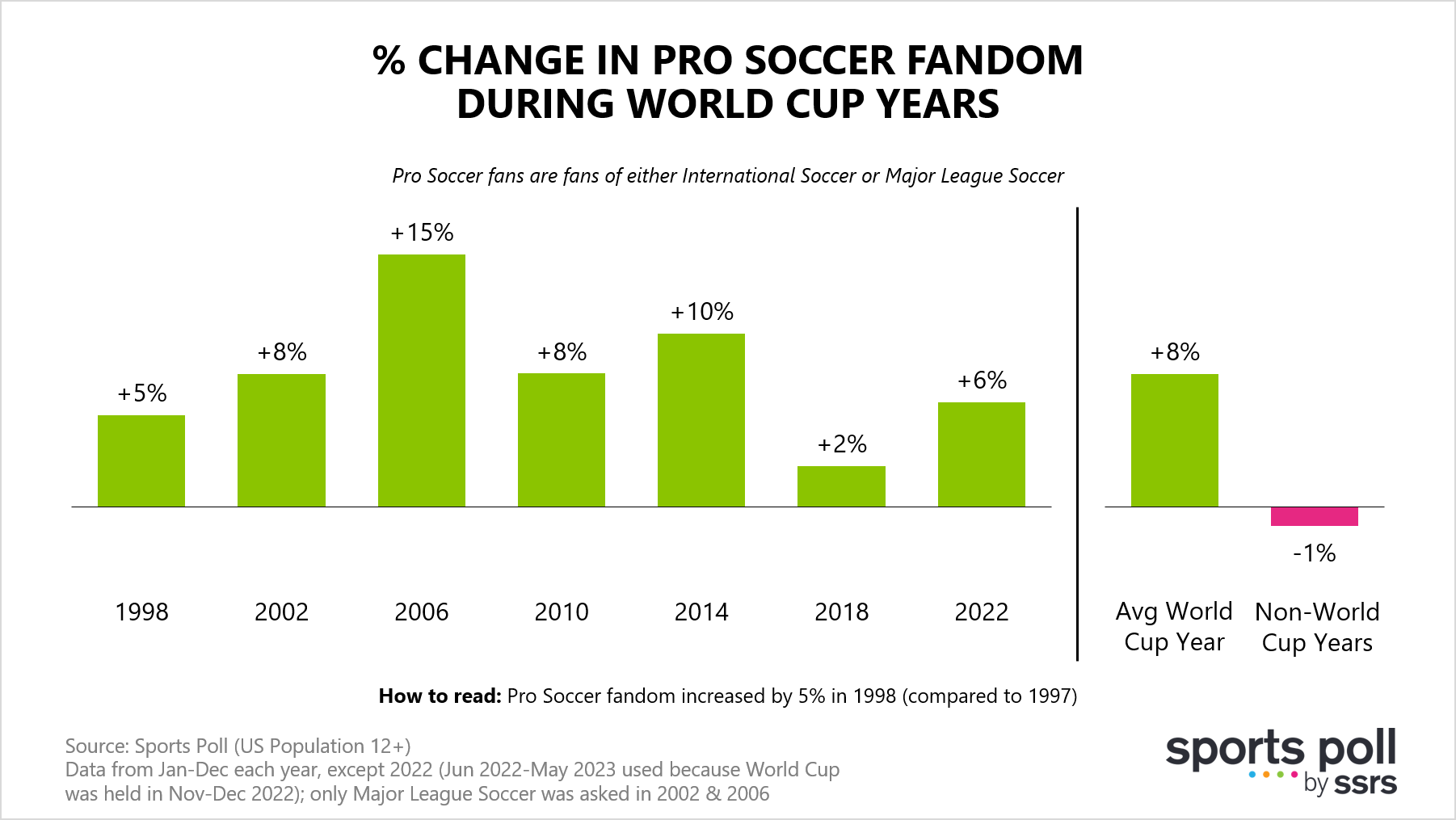
The largest single-year increase in fandom occurred in 2006, but fandom even rose in 2018 when the U.S. didn’t make the field. The average annual change over the past 30 years provides the best illustration of the World Cup’s impact on soccer in the U.S. Since the 1998 World Cup, pro soccer fandom grew by 8% on average during a World Cup year. In a typical year without a World Cup, soccer fandom declined by 1%.
The World Cup fosters a greater sense of belonging and drives social viewing as fans cheer for their national teams. The tournament also provides a stage for both established and emerging stars to become household names in the U.S. There is a honeymoon after the World Cup where fans continue to follow those players, their clubs, and their respective leagues.
These factors have all helped fuel the growth of the sport since 1994. Now as the tournament returns to U.S. soil again, there will be more exposure and potential for an even greater impact on the next generation of soccer fans.
For more information on the 80+ sports we track (including 18 soccer leagues), reach out to us.
Sports Poll by SSRS is conducted continuously throughout the year and includes a nationally representative sample of more than 24,000 Americans each year.