The latest Rutgers-Eagleton/SSRS Garden State Panel Omnibus reveals that Halloween traditions are alive and well in New Jersey.
Traditional door-to-door trick-or-treating remains the more common Halloween experience, particularly in Urban, Suburban and Exurban communities and among higher income households. Yet “trunk-or-treating” has become an important complementary tradition. The best news? Two-thirds of NJ adults who expect to get trick-or-treaters this year plan to hand out candy.
Findings are from a survey of n=1,004 New Jersey residents ages 18 and older, conducted from September 24-September 27, 2026, on the probability-based Garden State Panel. The survey was conducted via web and administered in English (n=988) and Spanish (n=16). The margin of error for total respondents is +/-4.1 percentage points at the 95% confidence level. All Garden State Panel Omnibus data are weighted to represent the target population of New Jersey adults ages 18 or older. View the topline >>
Traditional Door-to-Door Trick-or-Treating Still Reigns in NJ
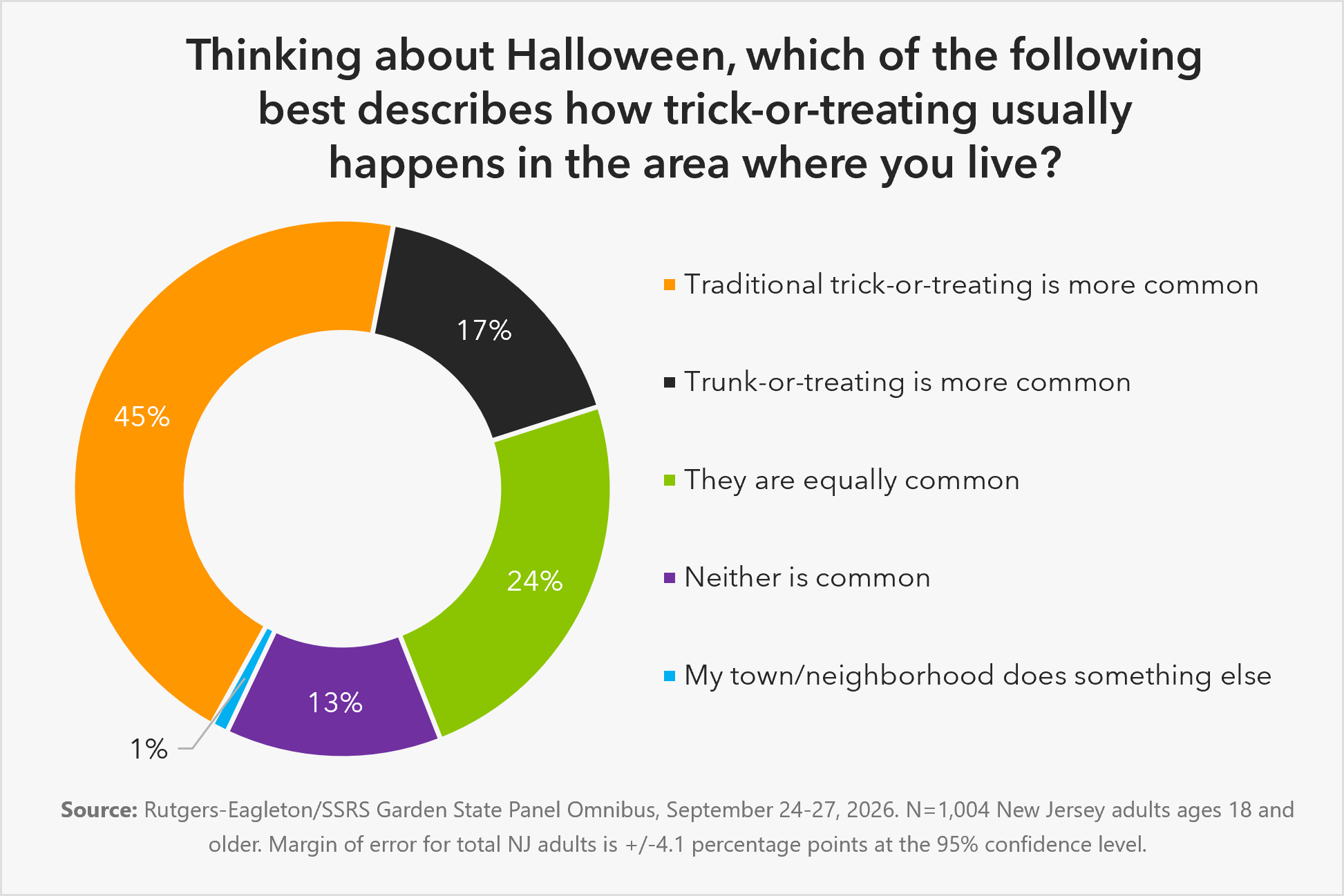
Despite the introduction of “trunk-or-treating,” traditional door-to-door trick-or-treating remains the more common activity in New Jersey. Forty-five percent of NJ adults say traditional door-to-door trick-or-treating is more common where they live, compared with 17% who say trunk-or-treating is more common. Another 24% report the two are equally common, with the remainder saying neither is common where they live (13%) or that their town or neighborhood does something else (1%).
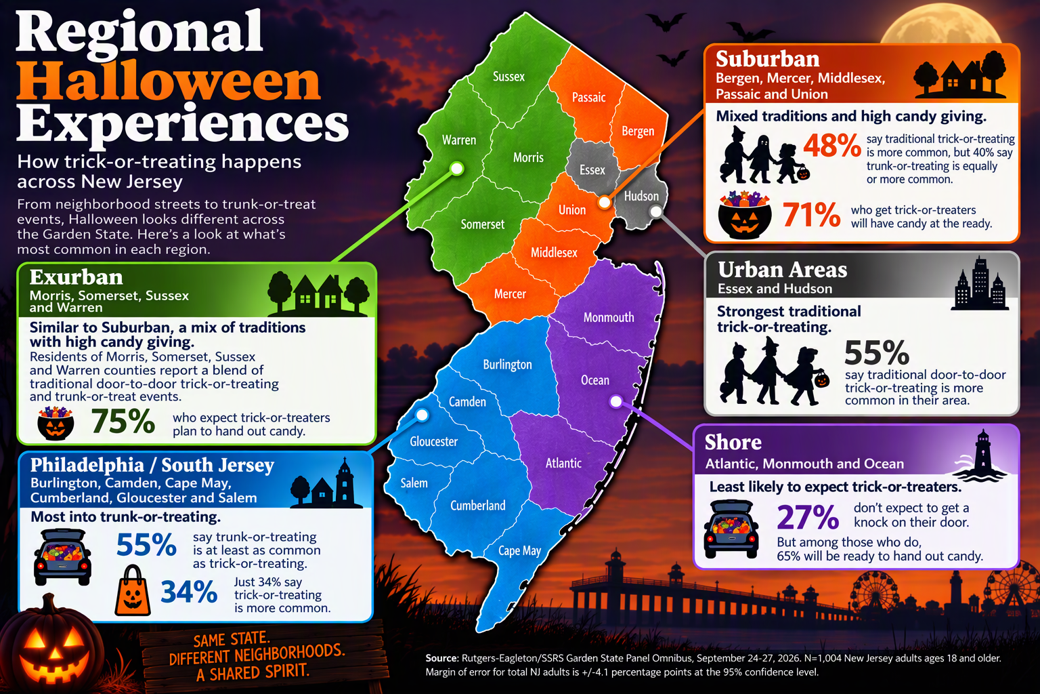
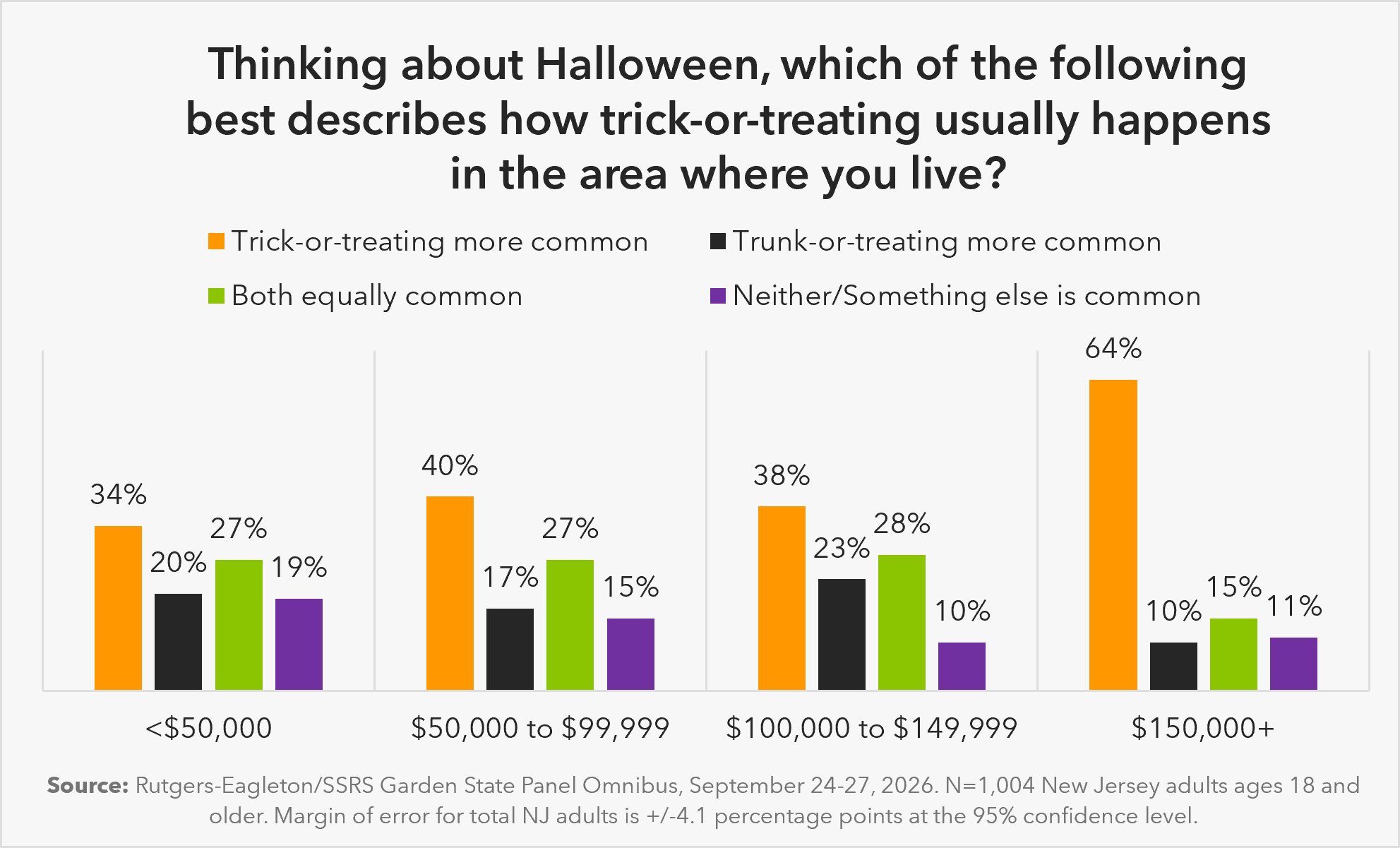
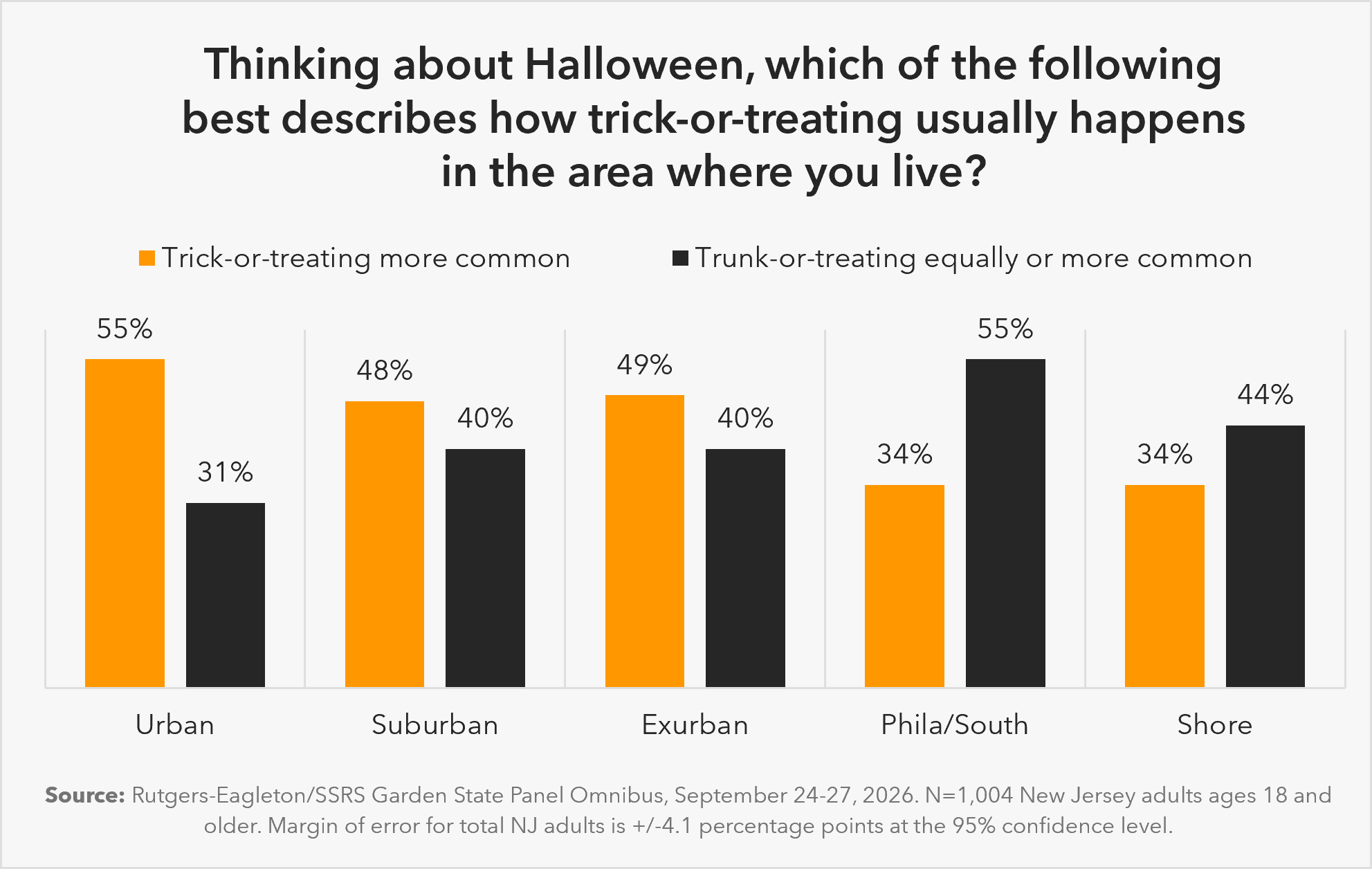
Higher-income residents are particularly likely to report traditional trick-or-treating is more common in their area, with 64% of adults with household incomes of $150,000 saying the traditional approach is more common where they live. The same is true of those living in the more densely populated Urban (55%), Suburban (48%) and Exurban (49%) regions of the state when compared with those in the Philadelphia/South (34%) or Shore regions (34%). NJ homeowners (48%) are more likely than renters (37%) to say traditional trick-or-treating is more common where they live.
But Trunk-or-Treating is Also Commonplace in Many Areas
While traditional trick-or-treating remains dominant, trunk-or-treat events have established themselves as a significant part of the Halloween landscape. With 17% reporting trunk-or-treating is more common than trick-or-treating where they live, and another 24% saying they are equally common, that means 41% of New Jersey adults live in areas where trunk-or-treating plays at least as large a role in holiday festivities as traditional door-to-door trick-or-treating.
Trunk-or-treating is most common in the Philadelphia/South region of the state, where 55% of adults say it is equally or more common than trick-or-treating. This region includes Burlington, Camden, Cape May, Cumberland, Gloucester, and Salem counties. In NJ’s Urban region, which includes Essex and Hudson counties, just 31% say trunk-or-treating is on par with or has surpassed traditional trick-or-treating.
Don’t Worry, Handing Out Candy Remains the Norm for NJ Adults Who Get Trick-or-Treaters
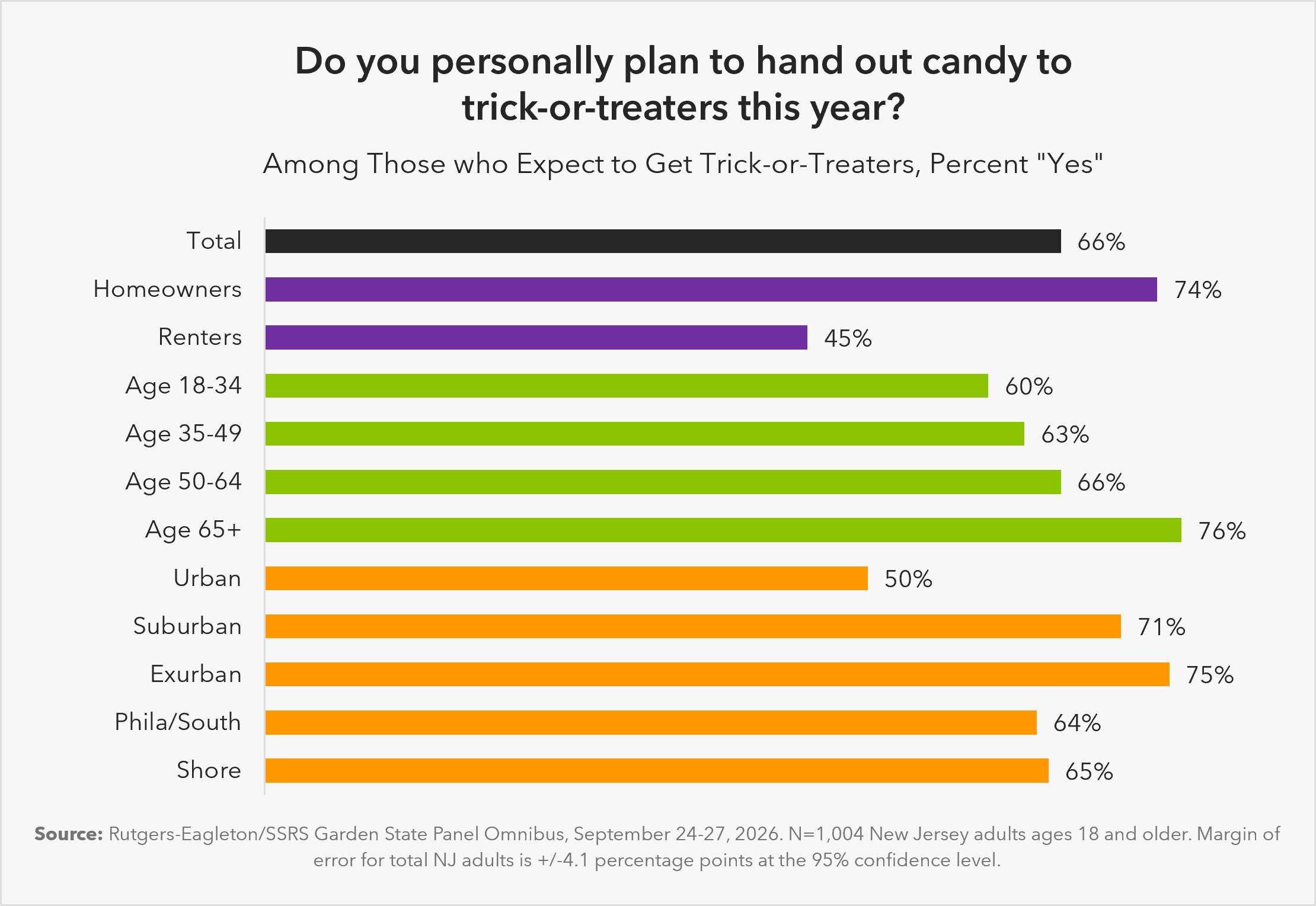
Overall, about half of New Jersey adults (52%) plan to hand out candy this year, while 26% say they don’t plan to and 22% say they don’t get trick-or-treaters. Looking just at NJ residents who expect to get trick-or-treaters, 66% plan to hand out candy. Phew!
Among those expecting trick-or-treaters, homeowners are more likely than renters to say they’ll be handing out candy, as are adults ages 65 and older when compared with younger New Jerseyans. Regionally, while three-quarters of residents of the state’s Exurban region (Morris, Somerset, Sussex and Warren counties) plan to give out candy, the same is true for only half of Urban region residents (Essex and Hudson counties) who get trick-or-treaters.
Halloween in NJ Looks a Little Different Depending on Where You Live
New Jersey’s “Suburban” and “Exurban” regions stand out as the state’s Halloween epicenters. Residents of these areas report that traditional trick-or-treating and trunk-or-treating are both common, and most who expect to get trick-or-treaters plan to hand out candy.
Traditional trick-or-treating is more common in the state’s Urban region, where trunk-or-treating and handing out candy are less common. The Shore region has the highest proportion of residents (20%) who say neither trick- or trunk-or-treating is common where they live and 27% of residents do not expect to get trick-or-treaters. The Philadelphia/South region is most evenly divided between trick- and trunk-or-treating, but both activities are reported to be less common than in most other regions.